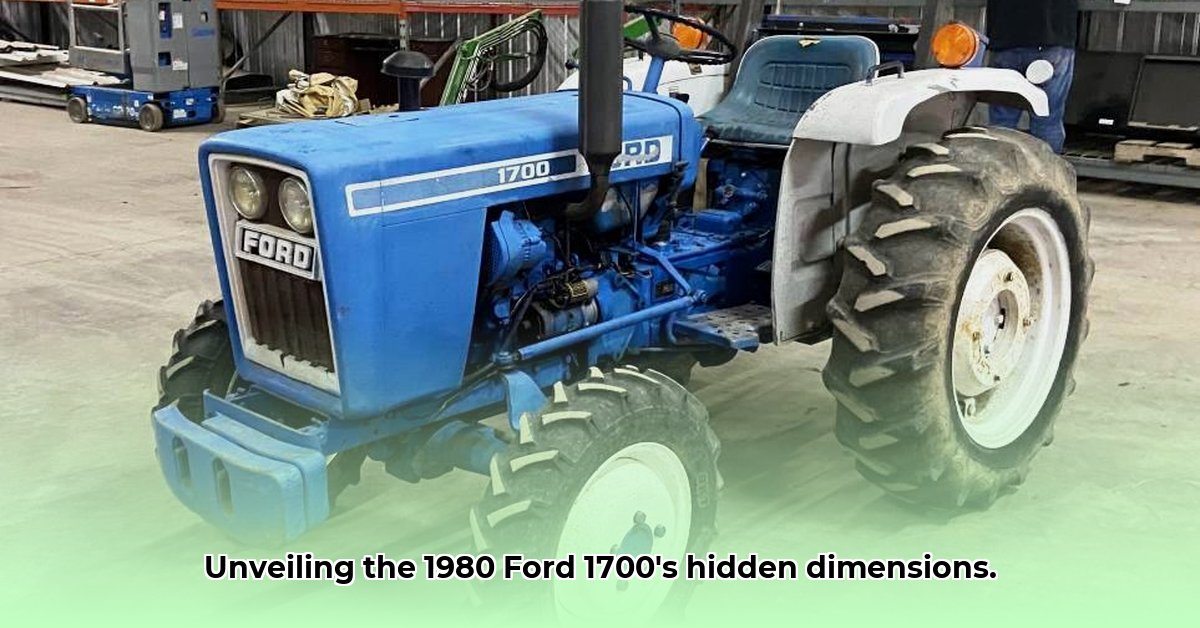
Technical Specifications: Unveiling the Ford 1700's Capabilities
The Ford 1700, a product of Shibaura (later Kubota) and manufactured from 1979 to 1983, stands as a testament to Japanese engineering prowess in the American agricultural market. This detailed technical review clarifies its specifications, addressing discrepancies found across various sources. Understanding its dimensions—length and width—is crucial for determining its suitability for diverse applications. But let's start with the complete picture. For more information on tractor tire sizes, check out this helpful resource.
Engine and Powertrain
| Specification | Value (Approximate) | Notes |
|---|---|---|
| Engine Model | Shibaura LE892 | A reliable two-cylinder diesel engine, common in tractors of this era. |
| Engine Type | 2-Cylinder, Naturally Aspirated Diesel | Simple design contributes to ease of maintenance, but lower power than modern counterparts. |
| Gross Engine Power (HP) | 25 | Variations exist across different sources; this is a commonly cited average. |
| PTO Horsepower | 23 | Power available at the power take-off shaft for operating implements. |
| Transmission Type | Manual, 12 Forward, 4 Reverse Gears | Provides sufficient speed ranges for various tasks. |
Dimensions and Weight
| Specification | Value (Approximate) | Notes |
|---|---|---|
| Length | 9-10 feet | This can vary slightly depending on tire size and optional attachments. |
| Width | 5-6 feet | Significantly affected by the width of attached implements. |
| Height | Approximately 6 feet | This is an estimate and may vary depending on the configuration. |
| Weight | 2444-2633 lbs | Affects traction and maneuverability; heavier means better traction in challenging conditions. |
Note: Discrepancies in reported dimensions across various sources underscore the importance of verifying measurements on a specific unit. Always measure your own tractor before making any assumptions based on published figures.
Hydraulics and Braking
| Specification | Value | Notes |
|---|---|---|
| Hydraulic System | Open-center | Simpler system than modern closed-center systems, offering less precise control. |
| Braking System | Mechanical Drum Brakes | A straightforward, robust system, but requiring more frequent maintenance than modern systems. |
Historical Context and Design Choices
The Ford 1700 emerged during a transitional period in agricultural technology (late 1970s and early 1980s). While larger, more technologically advanced tractors were gaining traction, the 1700 filled a niche for smaller farms and homeowners. Its compact size and relative simplicity made it an affordable and easy-to-maintain workhorse. Its design, a reflection of the technology available at the time, lacks the advanced electronics and sophisticated hydraulic systems found in modern tractors. This simplicity, however, translates into ease of maintenance and repair, a significant advantage for many users. This blend of affordability and rugged practicality explains its enduring appeal among vintage tractor enthusiasts.
Performance and Capabilities
The Ford 1700's compact design makes it highly maneuverable, ideal for smaller plots of land and for tasks requiring precise control. Common attachments include mowers, snow blowers, front-end loaders, and tillers/cultivators. Its limited horsepower, however, restricts its application to lighter-duty tasks. It excels in managing smaller properties but isn't suited for large-scale agricultural operations or heavy-duty plowing.
Maintenance and Restoration: A Guide to Longevity
Maintaining a Ford 1700 requires diligence. Regular fluid changes, inspections, and preventative maintenance are critical for extending its useful life. Parts sourcing can be challenging; building connections with vintage tractor parts suppliers is advisable. Basic mechanical knowledge is an asset in addressing common issues. A properly maintained Ford 1700 can provide years of service.
Market Value and Collector Interest
The market value of a Ford 1700 depends significantly on its condition and restoration. While its functional value remains substantial, its growing collector appeal increases its potential value. Its historical significance and its place in a niche market contributes to its current and future value.
Conclusion
The Ford 1700 presents a compelling blend of practicality and historical importance. While its capabilities are limited compared to contemporary tractors, its relative simplicity, ease of maintenance, and growing collector interest make it a desirable addition for hobbyists, small-landowners, and vintage equipment enthusiasts. A well-maintained Ford 1700 can continue to serve its owners for many years to come, proving a rewarding investment for those valuing both functionality and historical significance.